

Article content
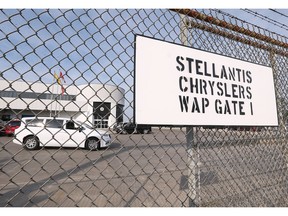
Windsor Assembly Plant, which was reduced to one product the past year, is expected to be producing four vehicles by the end of 2026 according to AutoForecast Solutions vice president of global vehicle forecasting Sam Fiorani.
The latest product added to the Windsor plant’s production schedule is a new three-row Dodge SUV.
“Currently, they’re (Stellantis) looking at a three-row Dodge SUV coming before the end of 2026 at Windsor,” Fiorani said.
Advertisement 2


Article content
“It will replace the Dodge Durango being produced alongside the Jeep Grand Cherokee at (Detroit’s) Jefferson Avenue plant.
“The Durango currently shares the Grand Cherokee platform. The new SUV will be on the STLA large platform they’re using in Windsor.”
The Durango is scheduled to cease production in 2027.
AutoForecast Solutions is a provider of global automotive forecasting databases and planning solutions for automakers and suppliers.
Fiorani has previously reported the company has scheduled a new two-row Chrysler crossover to begin production at Windsor Assembly in early 2026. He also correctly forecast Stellantis would build the new generation of Dodge Chargers in Windsor alongside the Pacifica minivan lineup.
The new Chrysler product will be the first model for the brand since the reintroduction of the Pacifica nameplate in 2017.
“Windsor has been a solid plant for decades now for the company,” said Fiorani of the choice of Windsor Assembly for the new products.
Fiorani also offered an update on when mass production of the new electric Charger would begin.
Advertisement 3
Article content
“It’s scheduled to be produced in the thousands in the last quarter of the year,” said Fiorani, who added the combustion-engine version of the vehicle would follow in the first half of 2025.
“They’ll start to trickle into dealerships before Christmas.”
The electric Charger was first scheduled to begin production this past June, but the company has been very conservative in taking the wraps of the iconic muscle car until it was confident it troubleshot all the issues out of the new model.
“This is a very important move forward for the company,” Fiorani said.
“This is a new platform with new technology for Stellantis and Windsor. Having delays is not unexpected.”
Fiorani said there are no major design overhauls planned for the Pacific minivan. He called the minivan market very stable at 400,000 vehicles sold annually in the U.S. and a fraction more in Canada.
“There’s not a lot of growth in the market, but the buyers are very loyal,” Fiorani said.
“It (Pacifica) will stay pretty much the same, but they’ll make some tweaks to it until 2029.”
Fiorani added Stellantis has also scheduled the production of a second vehicle in the Brampton Assembly Plant. The plant is currently being retooled to manufacture a new midsized Jeep product to replace the Compass.
Advertisement 4
Article content
“We see a midsized crossover carrying the Chrysler badge coming after the start of production of the replacement for the Compass,” Fiorani said. “The replacement for the Compass is scheduled for the summer of 2026, so it’ll be the end of 2026 or early 2027.
“The midsized Chrysler SUV will be positioned in the market behind the old Cherokee. It will be on the STLA medium platform.
“The Jeep product going in there is the key to Jeep’s size and growth.”
Stellantis CEO Carlos Tavares admitted as much during the company’s financial and sales report earlier this summer that saw both categories plummet in the first half of 2024. Tavares, who is in Detroit this week to work on a turnaround plan for the North American market, said not having the right product mix was one of the main reasons for the poor performance and singled out the lack of a new smaller Jeep products as a gap in the lineup.
Fiorani was also very optimistic about the future of Windsor’s two Ford engine plants. He said there’ll be a need for those internal-combustion engines beyond 2040.
“It was a good move by Ford to fill the Oakville plant with an in demand and highly profitable product (F-series trucks),” Fiorani said. “It secures jobs for a long time.
“The Super Duty trucks … will be the last vehicles to convert to EVs. Commercial buyers need reliable power for towing and hauling and EVs just aren’t ready for that.”
Dwaddell@postmedia.com
Twitter.com/winstarwaddell
Article content
link